new

Get trending papers in your email inbox!

Subscribe

Daily Papers

byAK and the research community

Feb 6

Enhancing Low-Cost Video Editing with Lightweight Adaptors and Temporal-Aware Inversion
Recent advancements in text-to-image (T2I) generation using diffusion models have enabled cost-effective video-editing applications by leveraging pre-trained models, eliminating the need for resource-intensive training. However, the frame-independence of T2I generation often results in poor temporal consistency. Existing methods address this issue through temporal layer fine-tuning or inference-based temporal propagation, but these approaches suffer from high training costs or limited temporal coherence. To address these challenges, we propose a General and Efficient Adapter (GE-Adapter) that integrates temporal-spatial and semantic consistency with Baliteral DDIM inversion. This framework introduces three key components: (1) Frame-based Temporal Consistency Blocks (FTC Blocks) to capture frame-specific features and enforce smooth inter-frame transitions via temporally-aware loss functions; (2) Channel-dependent Spatial Consistency Blocks (SCD Blocks) employing bilateral filters to enhance spatial coherence by reducing noise and artifacts; and (3) Token-based Semantic Consistency Module (TSC Module) to maintain semantic alignment using shared prompt tokens and frame-specific tokens. Our method significantly improves perceptual quality, text-image alignment, and temporal coherence, as demonstrated on the MSR-VTT dataset. Additionally, it achieves enhanced fidelity and frame-to-frame coherence, offering a practical solution for T2V editing.

  • 9 authors
·
Jan 8, 2025

Momentum-GS: Momentum Gaussian Self-Distillation for High-Quality Large Scene Reconstruction

3D Gaussian Splatting has demonstrated notable success in large-scale scene reconstruction, but challenges persist due to high training memory consumption and storage overhead. Hybrid representations that integrate implicit and explicit features offer a way to mitigate these limitations. However, when applied in parallelized block-wise training, two critical issues arise since reconstruction accuracy deteriorates due to reduced data diversity when training each block independently, and parallel training restricts the number of divided blocks to the available number of GPUs. To address these issues, we propose Momentum-GS, a novel approach that leverages momentum-based self-distillation to promote consistency and accuracy across the blocks while decoupling the number of blocks from the physical GPU count. Our method maintains a teacher Gaussian decoder updated with momentum, ensuring a stable reference during training. This teacher provides each block with global guidance in a self-distillation manner, promoting spatial consistency in reconstruction. To further ensure consistency across the blocks, we incorporate block weighting, dynamically adjusting each block's weight according to its reconstruction accuracy. Extensive experiments on large-scale scenes show that our method consistently outperforms existing techniques, achieving a 12.8% improvement in LPIPS over CityGaussian with much fewer divided blocks and establishing a new state of the art. Project page: https://jixuan-fan.github.io/Momentum-GS_Page/

  • 4 authors
·
Dec 6, 2024 3

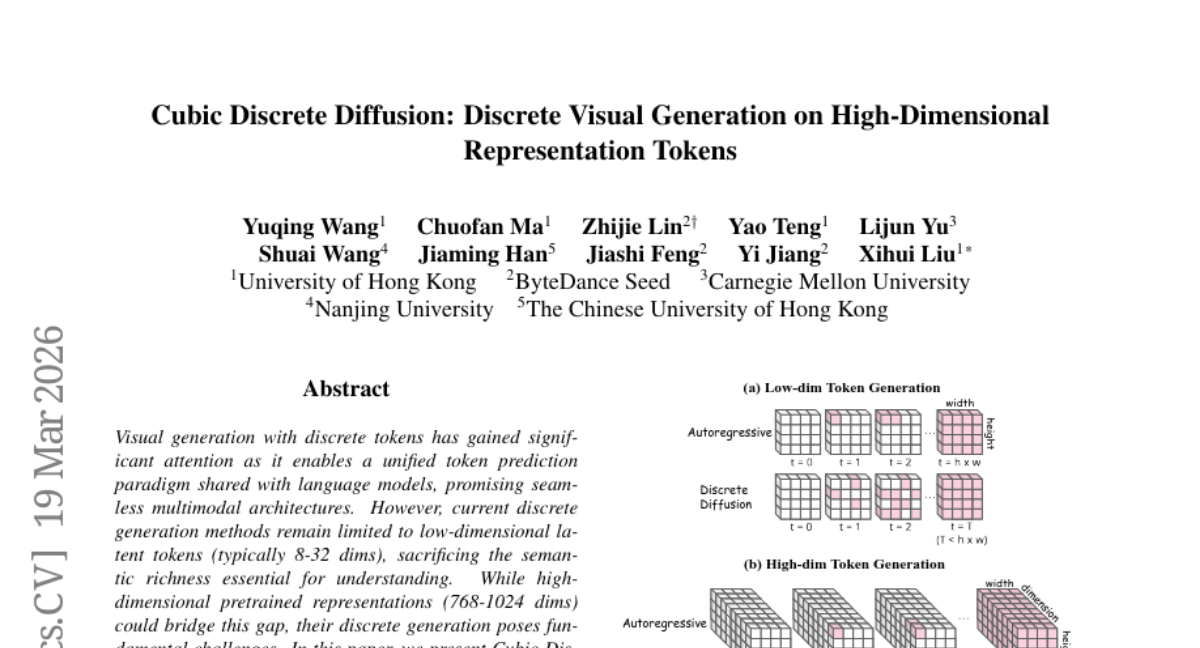
Taming Masked Diffusion Language Models via Consistency Trajectory Reinforcement Learning with Fewer Decoding Step

Masked diffusion language models (MDLMs) have recently emerged as a promising alternative to autoregressive (AR) language models, offering properties such as parallel decoding, flexible generation orders, and the potential for fewer inference steps. Despite these advantages, decoding strategies and reinforcement learning (RL) algorithms tailored for MDLMs remain underexplored. A naive approach is to directly transfer techniques well-established for AR models to MDLMs. However, this raises an immediate question: Is such a naive transfer truly optimal? For example, 1) Block-wise and semi-AR decoding strategies are not employed during the training of MDLMs, so why do they outperform full diffusion-style decoding during inference? 2) Applying RL algorithms designed for AR models directly to MDLMs exhibits a training-inference inconsistency, since MDLM decoding are non-causal (parallel). This results in inconsistencies between the rollout trajectory and the optimization trajectory. To address these challenges, we propose EOS Early Rejection (EOSER) and Ascending Step-Size (ASS) decoding scheduler, which unlock the potential of MDLMs to perform full diffusion-style decoding, achieving competitive performance with fewer decoding steps. Additionally, we introduce Consistency Trajectory Group Relative Policy Optimization (CJ-GRPO) for taming MDLMs, which emphasizes the consistency between rollout trajectory and optimization trajectory, and reduces the optimization errors caused by skip-step optimization. We conduct extensive experiments on reasoning tasks, such as mathematical and planning benchmarks, using LLaDA-8B-Instruct. The results demonstrate that the proposed EOSER and ASS mechanisms, together with CJ-GRPO, hold significant promise for effectively and efficiently taming MDLMs. Code: https://github.com/yjyddq/EOSER-ASS-RL.

Fudan-University Fudan University
·
Sep 28, 2025 1

Blockchain-Based Federated Learning: Incentivizing Data Sharing and Penalizing Dishonest Behavior

With the increasing importance of data sharing for collaboration and innovation, it is becoming more important to ensure that data is managed and shared in a secure and trustworthy manner. Data governance is a common approach to managing data, but it faces many challenges such as data silos, data consistency, privacy, security, and access control. To address these challenges, this paper proposes a comprehensive framework that integrates data trust in federated learning with InterPlanetary File System, blockchain, and smart contracts to facilitate secure and mutually beneficial data sharing while providing incentives, access control mechanisms, and penalizing any dishonest behavior. The experimental results demonstrate that the proposed model is effective in improving the accuracy of federated learning models while ensuring the security and fairness of the data-sharing process. The research paper also presents a decentralized federated learning platform that successfully trained a CNN model on the MNIST dataset using blockchain technology. The platform enables multiple workers to train the model simultaneously while maintaining data privacy and security. The decentralized architecture and use of blockchain technology allow for efficient communication and coordination between workers. This platform has the potential to facilitate decentralized machine learning and support privacy-preserving collaboration in various domains.

  • 6 authors
·
Jul 19, 2023

Learning Enhanced Structural Representations with Block-Based Uncertainties for Ocean Floor Mapping

Accurate ocean modeling and coastal hazard prediction depend on high-resolution bathymetric data; yet, current worldwide datasets are too coarse for exact numerical simulations. While recent deep learning advances have improved earth observation data resolution, existing methods struggle with the unique challenges of producing detailed ocean floor maps, especially in maintaining physical structure consistency and quantifying uncertainties. This work presents a novel uncertainty-aware mechanism using spatial blocks to efficiently capture local bathymetric complexity based on block-based conformal prediction. Using the Vector Quantized Variational Autoencoder (VQ-VAE) architecture, the integration of this uncertainty quantification framework yields spatially adaptive confidence estimates while preserving topographical features via discrete latent representations. With smaller uncertainty widths in well-characterized areas and appropriately larger bounds in areas of complex seafloor structures, the block-based design adapts uncertainty estimates to local bathymetric complexity. Compared to conventional techniques, experimental results over several ocean regions show notable increases in both reconstruction quality and uncertainty estimation reliability. This framework increases the reliability of bathymetric reconstructions by preserving structural integrity while offering spatially adaptive uncertainty estimates, so opening the path for more solid climate modeling and coastal hazard assessment.

  • 1 authors
·
Apr 19, 2025

SINet: Extreme Lightweight Portrait Segmentation Networks with Spatial Squeeze Modules and Information Blocking Decoder

Designing a lightweight and robust portrait segmentation algorithm is an important task for a wide range of face applications. However, the problem has been considered as a subset of the object segmentation problem and less handled in the semantic segmentation field. Obviously, portrait segmentation has its unique requirements. First, because the portrait segmentation is performed in the middle of a whole process of many real-world applications, it requires extremely lightweight models. Second, there has not been any public datasets in this domain that contain a sufficient number of images with unbiased statistics. To solve the first problem, we introduce the new extremely lightweight portrait segmentation model SINet, containing an information blocking decoder and spatial squeeze modules. The information blocking decoder uses confidence estimates to recover local spatial information without spoiling global consistency. The spatial squeeze module uses multiple receptive fields to cope with various sizes of consistency in the image. To tackle the second problem, we propose a simple method to create additional portrait segmentation data which can improve accuracy on the EG1800 dataset. In our qualitative and quantitative analysis on the EG1800 dataset, we show that our method outperforms various existing lightweight segmentation models. Our method reduces the number of parameters from 2.1M to 86.9K (around 95.9% reduction), while maintaining the accuracy under an 1% margin from the state-of-the-art portrait segmentation method. We also show our model is successfully executed on a real mobile device with 100.6 FPS. In addition, we demonstrate that our method can be used for general semantic segmentation on the Cityscapes dataset. The code and dataset are available in https://github.com/HYOJINPARK/ExtPortraitSeg .

  • 6 authors
·
Nov 20, 2019

Recurrent Variational Network: A Deep Learning Inverse Problem Solver applied to the task of Accelerated MRI Reconstruction

Magnetic Resonance Imaging can produce detailed images of the anatomy and physiology of the human body that can assist doctors in diagnosing and treating pathologies such as tumours. However, MRI suffers from very long acquisition times that make it susceptible to patient motion artifacts and limit its potential to deliver dynamic treatments. Conventional approaches such as Parallel Imaging and Compressed Sensing allow for an increase in MRI acquisition speed by reconstructing MR images from sub-sampled MRI data acquired using multiple receiver coils. Recent advancements in Deep Learning combined with Parallel Imaging and Compressed Sensing techniques have the potential to produce high-fidelity reconstructions from highly accelerated MRI data. In this work we present a novel Deep Learning-based Inverse Problem solver applied to the task of Accelerated MRI Reconstruction, called the Recurrent Variational Network (RecurrentVarNet), by exploiting the properties of Convolutional Recurrent Neural Networks and unrolled algorithms for solving Inverse Problems. The RecurrentVarNet consists of multiple recurrent blocks, each responsible for one iteration of the unrolled variational optimization scheme for solving the inverse problem of multi-coil Accelerated MRI Reconstruction. Contrary to traditional approaches, the optimization steps are performed in the observation domain (k-space) instead of the image domain. Each block of the RecurrentVarNet refines the observed k-space and comprises a data consistency term and a recurrent unit which takes as input a learned hidden state and the prediction of the previous block. Our proposed method achieves new state of the art qualitative and quantitative reconstruction results on 5-fold and 10-fold accelerated data from a public multi-coil brain dataset, outperforming previous conventional and deep learning-based approaches.

  • 4 authors
·
Nov 18, 2021

LinGen: Towards High-Resolution Minute-Length Text-to-Video Generation with Linear Computational Complexity

Text-to-video generation enhances content creation but is highly computationally intensive: The computational cost of Diffusion Transformers (DiTs) scales quadratically in the number of pixels. This makes minute-length video generation extremely expensive, limiting most existing models to generating videos of only 10-20 seconds length. We propose a Linear-complexity text-to-video Generation (LinGen) framework whose cost scales linearly in the number of pixels. For the first time, LinGen enables high-resolution minute-length video generation on a single GPU without compromising quality. It replaces the computationally-dominant and quadratic-complexity block, self-attention, with a linear-complexity block called MATE, which consists of an MA-branch and a TE-branch. The MA-branch targets short-to-long-range correlations, combining a bidirectional Mamba2 block with our token rearrangement method, Rotary Major Scan, and our review tokens developed for long video generation. The TE-branch is a novel TEmporal Swin Attention block that focuses on temporal correlations between adjacent tokens and medium-range tokens. The MATE block addresses the adjacency preservation issue of Mamba and improves the consistency of generated videos significantly. Experimental results show that LinGen outperforms DiT (with a 75.6% win rate) in video quality with up to 15times (11.5times) FLOPs (latency) reduction. Furthermore, both automatic metrics and human evaluation demonstrate our LinGen-4B yields comparable video quality to state-of-the-art models (with a 50.5%, 52.1%, 49.1% win rate with respect to Gen-3, LumaLabs, and Kling, respectively). This paves the way to hour-length movie generation and real-time interactive video generation. We provide 68s video generation results and more examples in our project website: https://lineargen.github.io/.

  • 13 authors
·
Dec 12, 2024 4

DynamiCtrl: Rethinking the Basic Structure and the Role of Text for High-quality Human Image Animation

With diffusion transformer (DiT) excelling in video generation, its use in specific tasks has drawn increasing attention. However, adapting DiT for pose-guided human image animation faces two core challenges: (a) existing U-Net-based pose control methods may be suboptimal for the DiT backbone; and (b) removing text guidance, as in previous approaches, often leads to semantic loss and model degradation. To address these issues, we propose DynamiCtrl, a novel framework for human animation in video DiT architecture. Specifically, we use a shared VAE encoder for human images and driving poses, unifying them into a common latent space, maintaining pose fidelity, and eliminating the need for an expert pose encoder during video denoising. To integrate pose control into the DiT backbone effectively, we propose a novel Pose-adaptive Layer Norm model. It injects normalized pose features into the denoising process via conditioning on visual tokens, enabling seamless and scalable pose control across DiT blocks. Furthermore, to overcome the shortcomings of text removal, we introduce the "Joint-text" paradigm, which preserves the role of text embeddings to provide global semantic context. Through full-attention blocks, image and pose features are aligned with text features, enhancing semantic consistency, leveraging pretrained knowledge, and enabling multi-level control. Experiments verify the superiority of DynamiCtrl on benchmark and self-collected data (e.g., achieving the best LPIPS of 0.166), demonstrating strong character control and high-quality synthesis. The project page is available at https://gulucaptain.github.io/DynamiCtrl/.

  • 8 authors
·
Mar 27, 2025

Betrayed by Attention: A Simple yet Effective Approach for Self-supervised Video Object Segmentation

In this paper, we propose a simple yet effective approach for self-supervised video object segmentation (VOS). Our key insight is that the inherent structural dependencies present in DINO-pretrained Transformers can be leveraged to establish robust spatio-temporal correspondences in videos. Furthermore, simple clustering on this correspondence cue is sufficient to yield competitive segmentation results. Previous self-supervised VOS techniques majorly resort to auxiliary modalities or utilize iterative slot attention to assist in object discovery, which restricts their general applicability and imposes higher computational requirements. To deal with these challenges, we develop a simplified architecture that capitalizes on the emerging objectness from DINO-pretrained Transformers, bypassing the need for additional modalities or slot attention. Specifically, we first introduce a single spatio-temporal Transformer block to process the frame-wise DINO features and establish spatio-temporal dependencies in the form of self-attention. Subsequently, utilizing these attention maps, we implement hierarchical clustering to generate object segmentation masks. To train the spatio-temporal block in a fully self-supervised manner, we employ semantic and dynamic motion consistency coupled with entropy normalization. Our method demonstrates state-of-the-art performance across multiple unsupervised VOS benchmarks and particularly excels in complex real-world multi-object video segmentation tasks such as DAVIS-17-Unsupervised and YouTube-VIS-19. The code and model checkpoints will be released at https://github.com/shvdiwnkozbw/SSL-UVOS.

  • 5 authors
·
Nov 29, 2023

Blended Latent Diffusion under Attention Control for Real-World Video Editing

Due to lack of fully publicly available text-to-video models, current video editing methods tend to build on pre-trained text-to-image generation models, however, they still face grand challenges in dealing with the local editing of video with temporal information. First, although existing methods attempt to focus on local area editing by a pre-defined mask, the preservation of the outside-area background is non-ideal due to the spatially entire generation of each frame. In addition, specially providing a mask by user is an additional costly undertaking, so an autonomous masking strategy integrated into the editing process is desirable. Last but not least, image-level pretrained model hasn't learned temporal information across frames of a video which is vital for expressing the motion and dynamics. In this paper, we propose to adapt a image-level blended latent diffusion model to perform local video editing tasks. Specifically, we leverage DDIM inversion to acquire the latents as background latents instead of the randomly noised ones to better preserve the background information of the input video. We further introduce an autonomous mask manufacture mechanism derived from cross-attention maps in diffusion steps. Finally, we enhance the temporal consistency across video frames by transforming the self-attention blocks of U-Net into temporal-spatial blocks. Through extensive experiments, our proposed approach demonstrates effectiveness in different real-world video editing tasks.

  • 3 authors
·
Sep 5, 2024

Motion Mamba: Efficient and Long Sequence Motion Generation with Hierarchical and Bidirectional Selective SSM

Human motion generation stands as a significant pursuit in generative computer vision, while achieving long-sequence and efficient motion generation remains challenging. Recent advancements in state space models (SSMs), notably Mamba, have showcased considerable promise in long sequence modeling with an efficient hardware-aware design, which appears to be a promising direction to build motion generation model upon it. Nevertheless, adapting SSMs to motion generation faces hurdles since the lack of a specialized design architecture to model motion sequence. To address these challenges, we propose Motion Mamba, a simple and efficient approach that presents the pioneering motion generation model utilized SSMs. Specifically, we design a Hierarchical Temporal Mamba (HTM) block to process temporal data by ensemble varying numbers of isolated SSM modules across a symmetric U-Net architecture aimed at preserving motion consistency between frames. We also design a Bidirectional Spatial Mamba (BSM) block to bidirectionally process latent poses, to enhance accurate motion generation within a temporal frame. Our proposed method achieves up to 50% FID improvement and up to 4 times faster on the HumanML3D and KIT-ML datasets compared to the previous best diffusion-based method, which demonstrates strong capabilities of high-quality long sequence motion modeling and real-time human motion generation. See project website https://steve-zeyu-zhang.github.io/MotionMamba/

  • 6 authors
·
Mar 12, 2024 4

Playing with Transformer at 30+ FPS via Next-Frame Diffusion

Autoregressive video models offer distinct advantages over bidirectional diffusion models in creating interactive video content and supporting streaming applications with arbitrary duration. In this work, we present Next-Frame Diffusion (NFD), an autoregressive diffusion transformer that incorporates block-wise causal attention, enabling iterative sampling and efficient inference via parallel token generation within each frame. Nonetheless, achieving real-time video generation remains a significant challenge for such models, primarily due to the high computational cost associated with diffusion sampling and the hardware inefficiencies inherent to autoregressive generation. To address this, we introduce two innovations: (1) We extend consistency distillation to the video domain and adapt it specifically for video models, enabling efficient inference with few sampling steps; (2) To fully leverage parallel computation, motivated by the observation that adjacent frames often share the identical action input, we propose speculative sampling. In this approach, the model generates next few frames using current action input, and discard speculatively generated frames if the input action differs. Experiments on a large-scale action-conditioned video generation benchmark demonstrate that NFD beats autoregressive baselines in terms of both visual quality and sampling efficiency. We, for the first time, achieves autoregressive video generation at over 30 Frames Per Second (FPS) on an A100 GPU using a 310M model.

  • 6 authors
·
Jun 2, 2025

BroadWay: Boost Your Text-to-Video Generation Model in a Training-free Way

The text-to-video (T2V) generation models, offering convenient visual creation, have recently garnered increasing attention. Despite their substantial potential, the generated videos may present artifacts, including structural implausibility, temporal inconsistency, and a lack of motion, often resulting in near-static video. In this work, we have identified a correlation between the disparity of temporal attention maps across different blocks and the occurrence of temporal inconsistencies. Additionally, we have observed that the energy contained within the temporal attention maps is directly related to the magnitude of motion amplitude in the generated videos. Based on these observations, we present BroadWay, a training-free method to improve the quality of text-to-video generation without introducing additional parameters, augmenting memory or sampling time. Specifically, BroadWay is composed of two principal components: 1) Temporal Self-Guidance improves the structural plausibility and temporal consistency of generated videos by reducing the disparity between the temporal attention maps across various decoder blocks. 2) Fourier-based Motion Enhancement enhances the magnitude and richness of motion by amplifying the energy of the map. Extensive experiments demonstrate that BroadWay significantly improves the quality of text-to-video generation with negligible additional cost.

  • 9 authors
·
Oct 8, 2024 2

DF-GAN: A Simple and Effective Baseline for Text-to-Image Synthesis

Synthesizing high-quality realistic images from text descriptions is a challenging task. Existing text-to-image Generative Adversarial Networks generally employ a stacked architecture as the backbone yet still remain three flaws. First, the stacked architecture introduces the entanglements between generators of different image scales. Second, existing studies prefer to apply and fix extra networks in adversarial learning for text-image semantic consistency, which limits the supervision capability of these networks. Third, the cross-modal attention-based text-image fusion that widely adopted by previous works is limited on several special image scales because of the computational cost. To these ends, we propose a simpler but more effective Deep Fusion Generative Adversarial Networks (DF-GAN). To be specific, we propose: (i) a novel one-stage text-to-image backbone that directly synthesizes high-resolution images without entanglements between different generators, (ii) a novel Target-Aware Discriminator composed of Matching-Aware Gradient Penalty and One-Way Output, which enhances the text-image semantic consistency without introducing extra networks, (iii) a novel deep text-image fusion block, which deepens the fusion process to make a full fusion between text and visual features. Compared with current state-of-the-art methods, our proposed DF-GAN is simpler but more efficient to synthesize realistic and text-matching images and achieves better performance on widely used datasets.

  • 6 authors
·
Aug 13, 2020

Improved Techniques for Training Consistency Models

Consistency models are a nascent family of generative models that can sample high quality data in one step without the need for adversarial training. Current consistency models achieve optimal sample quality by distilling from pre-trained diffusion models and employing learned metrics such as LPIPS. However, distillation limits the quality of consistency models to that of the pre-trained diffusion model, and LPIPS causes undesirable bias in evaluation. To tackle these challenges, we present improved techniques for consistency training, where consistency models learn directly from data without distillation. We delve into the theory behind consistency training and identify a previously overlooked flaw, which we address by eliminating Exponential Moving Average from the teacher consistency model. To replace learned metrics like LPIPS, we adopt Pseudo-Huber losses from robust statistics. Additionally, we introduce a lognormal noise schedule for the consistency training objective, and propose to double total discretization steps every set number of training iterations. Combined with better hyperparameter tuning, these modifications enable consistency models to achieve FID scores of 2.51 and 3.25 on CIFAR-10 and ImageNet 64times 64 respectively in a single sampling step. These scores mark a 3.5times and 4times improvement compared to prior consistency training approaches. Through two-step sampling, we further reduce FID scores to 2.24 and 2.77 on these two datasets, surpassing those obtained via distillation in both one-step and two-step settings, while narrowing the gap between consistency models and other state-of-the-art generative models.

  • 2 authors
·
Oct 22, 2023 1

Improved Training Technique for Latent Consistency Models

Consistency models are a new family of generative models capable of producing high-quality samples in either a single step or multiple steps. Recently, consistency models have demonstrated impressive performance, achieving results on par with diffusion models in the pixel space. However, the success of scaling consistency training to large-scale datasets, particularly for text-to-image and video generation tasks, is determined by performance in the latent space. In this work, we analyze the statistical differences between pixel and latent spaces, discovering that latent data often contains highly impulsive outliers, which significantly degrade the performance of iCT in the latent space. To address this, we replace Pseudo-Huber losses with Cauchy losses, effectively mitigating the impact of outliers. Additionally, we introduce a diffusion loss at early timesteps and employ optimal transport (OT) coupling to further enhance performance. Lastly, we introduce the adaptive scaling-c scheduler to manage the robust training process and adopt Non-scaling LayerNorm in the architecture to better capture the statistics of the features and reduce outlier impact. With these strategies, we successfully train latent consistency models capable of high-quality sampling with one or two steps, significantly narrowing the performance gap between latent consistency and diffusion models. The implementation is released here: https://github.com/quandao10/sLCT/

  • 5 authors
·
Feb 3, 2025 2

ConAIR:Consistency-Augmented Iterative Interaction Framework to Enhance the Reliability of Code Generation

Code generation techniques generate code snippets automatically based on the problem requirements in natural language. Recently, large language models (LLMs) achieve the SOTA performance on code generation. However, LLMs still struggle at times to generate accurate code, which diminishes their promised efficiency as developers must spend significant effort evaluating and debugging the generated code. To improve the reliability and quality of the generated codes, researchers propose to leverage Consistency to obtain a better code based on generating and ranking multiple candidates. The existing approach is problematic as Consistency thinks a code is better when (1) the code pass more tests (inter-consistency) (2) more codes share the same behavior (intra-consistency). However, because the tests are also generated by LLMs, they could be wrong as well. As a result, majority voting based on testing results is unreliable. Relying solely on consistency is insufficient to address this issue; integrating user feedback is essential for effectively guiding consistency. We show that with minimal human effort, performance can be significantly enhanced. We propose Consistency-Augmented Iterative Interaction Framework to Enhance the Reliability of Code Generation, ConAIR, which is an approach that aims to improve the performance of a code generator through two distinctive ingredients, i.e., (1) lightweight user effort for validating the correctness of selected tests; and (2) a dynamic strategy for ranking, localizing and correcting multiple tests and codes. Overall, we propose a lightweight interaction framework that incorporates user feedback to correct identified tests and guide the iterative process. The iteration rounds are only 4 in average with the help of consistency. With only lightweight human efforts, we can achieve an improvement of 33% towards the base model.

  • 5 authors
·
Nov 23, 2024

Assessment of Data Consistency through Cascades of Independently Recurrent Inference Machines for fast and robust accelerated MRI reconstruction

Machine Learning methods can learn how to reconstruct Magnetic Resonance Images and thereby accelerate acquisition, which is of paramount importance to the clinical workflow. Physics-informed networks incorporate the forward model of accelerated MRI reconstruction in the learning process. With increasing network complexity, robustness is not ensured when reconstructing data unseen during training. We aim to embed data consistency (DC) in deep networks while balancing the degree of network complexity. While doing so, we will assess whether either explicit or implicit enforcement of DC in varying network architectures is preferred to optimize performance. We propose a scheme called Cascades of Independently Recurrent Inference Machines (CIRIM) to assess DC through unrolled optimization. Herein we assess DC both implicitly by gradient descent and explicitly by a designed term. Extensive comparison of the CIRIM to CS as well as to other methods is performed: the E2EVN, CascadeNet, KIKINet, LPDNet, RIM, IRIM, and UNet. Models were trained and evaluated on T1-weighted and FLAIR contrast brain data, and T2-weighted knee data. Both 1D and 2D undersampling patterns were evaluated. Robustness was tested by reconstructing 7.5x prospectively undersampled 3D FLAIR MRI data of Multiple Sclerosis (MS) patients with white matter lesions. The CIRIM performed best when implicitly enforcing DC, while the E2EVN required an explicit DC formulation. In reconstructing MS patient data, prospectively acquired with a sampling pattern unseen during model training, the CIRIM maintained lesion contrast while efficiently denoising the images. The CIRIM showed highly promising generalization capabilities maintaining a very fair trade-off between reconstructed image quality and fast reconstruction times, which is crucial in the clinical workflow.

  • 5 authors
·
Nov 30, 2021

Image-Free Timestep Distillation via Continuous-Time Consistency with Trajectory-Sampled Pairs

Timestep distillation is an effective approach for improving the generation efficiency of diffusion models. The Consistency Model (CM), as a trajectory-based framework, demonstrates significant potential due to its strong theoretical foundation and high-quality few-step generation. Nevertheless, current continuous-time consistency distillation methods still rely heavily on training data and computational resources, hindering their deployment in resource-constrained scenarios and limiting their scalability to diverse domains. To address this issue, we propose Trajectory-Backward Consistency Model (TBCM), which eliminates the dependence on external training data by extracting latent representations directly from the teacher model's generation trajectory. Unlike conventional methods that require VAE encoding and large-scale datasets, our self-contained distillation paradigm significantly improves both efficiency and simplicity. Moreover, the trajectory-extracted samples naturally bridge the distribution gap between training and inference, thereby enabling more effective knowledge transfer. Empirically, TBCM achieves 6.52 FID and 28.08 CLIP scores on MJHQ-30k under one-step generation, while reducing training time by approximately 40% compared to Sana-Sprint and saving a substantial amount of GPU memory, demonstrating superior efficiency without sacrificing quality. We further reveal the diffusion-generation space discrepancy in continuous-time consistency distillation and analyze how sampling strategies affect distillation performance, offering insights for future distillation research. GitHub Link: https://github.com/hustvl/TBCM.

  • 8 authors
·
Nov 25, 2025 2

Equality before the Law: Legal Judgment Consistency Analysis for Fairness

In a legal system, judgment consistency is regarded as one of the most important manifestations of fairness. However, due to the complexity of factual elements that impact sentencing in real-world scenarios, few works have been done on quantitatively measuring judgment consistency towards real-world data. In this paper, we propose an evaluation metric for judgment inconsistency, Legal Inconsistency Coefficient (LInCo), which aims to evaluate inconsistency between data groups divided by specific features (e.g., gender, region, race). We propose to simulate judges from different groups with legal judgment prediction (LJP) models and measure the judicial inconsistency with the disagreement of the judgment results given by LJP models trained on different groups. Experimental results on the synthetic data verify the effectiveness of LInCo. We further employ LInCo to explore the inconsistency in real cases and come to the following observations: (1) Both regional and gender inconsistency exist in the legal system, but gender inconsistency is much less than regional inconsistency; (2) The level of regional inconsistency varies little across different time periods; (3) In general, judicial inconsistency is negatively correlated with the severity of the criminal charges. Besides, we use LInCo to evaluate the performance of several de-bias methods, such as adversarial learning, and find that these mechanisms can effectively help LJP models to avoid suffering from data bias.

  • 8 authors
·
Mar 25, 2021

Pandora3D: A Comprehensive Framework for High-Quality 3D Shape and Texture Generation

This report presents a comprehensive framework for generating high-quality 3D shapes and textures from diverse input prompts, including single images, multi-view images, and text descriptions. The framework consists of 3D shape generation and texture generation. (1). The 3D shape generation pipeline employs a Variational Autoencoder (VAE) to encode implicit 3D geometries into a latent space and a diffusion network to generate latents conditioned on input prompts, with modifications to enhance model capacity. An alternative Artist-Created Mesh (AM) generation approach is also explored, yielding promising results for simpler geometries. (2). Texture generation involves a multi-stage process starting with frontal images generation followed by multi-view images generation, RGB-to-PBR texture conversion, and high-resolution multi-view texture refinement. A consistency scheduler is plugged into every stage, to enforce pixel-wise consistency among multi-view textures during inference, ensuring seamless integration. The pipeline demonstrates effective handling of diverse input formats, leveraging advanced neural architectures and novel methodologies to produce high-quality 3D content. This report details the system architecture, experimental results, and potential future directions to improve and expand the framework. The source code and pretrained weights are released at: https://github.com/Tencent/Tencent-XR-3DGen.

  • 10 authors
·
Feb 19, 2025 2

The Trickle-down Impact of Reward (In-)consistency on RLHF

Standard practice within Reinforcement Learning from Human Feedback (RLHF) involves optimizing against a Reward Model (RM), which itself is trained to reflect human preferences for desirable generations. A notable subject that is understudied is the (in-)consistency of RMs -- whether they can recognize the semantic changes to different prompts and appropriately adapt their reward assignments -- and their impact on the downstream RLHF model. In this paper, we visit a series of research questions relevant to RM inconsistency: (1) How can we measure the consistency of reward models? (2) How consistent are the existing RMs and how can we improve them? (3) In what ways does reward inconsistency influence the chatbots resulting from the RLHF model training? We propose Contrast Instructions -- a benchmarking strategy for the consistency of RM. Each example in Contrast Instructions features a pair of lexically similar instructions with different ground truth responses. A consistent RM is expected to rank the corresponding instruction and response higher than other combinations. We observe that current RMs trained with the standard ranking objective fail miserably on Contrast Instructions compared to average humans. To show that RM consistency can be improved efficiently without using extra training budget, we propose two techniques ConvexDA and RewardFusion, which enhance reward consistency through extrapolation during the RM training and inference stage, respectively. We show that RLHF models trained with a more consistent RM yield more useful responses, suggesting that reward inconsistency exhibits a trickle-down effect on the downstream RLHF process.

  • 8 authors
·
Sep 28, 2023

Improving Consistency in Retrieval-Augmented Systems with Group Similarity Rewards

RAG systems are increasingly deployed in high-stakes domains where users expect outputs to be consistent across semantically equivalent queries. However, existing systems often exhibit significant inconsistencies due to variability in both the retriever and generator (LLM), undermining trust and reliability. In this work, we focus on information consistency, i.e., the requirement that outputs convey the same core content across semantically equivalent inputs. We introduce a principled evaluation framework that decomposes RAG consistency into retriever-level, generator-level, and end-to-end components, helping identify inconsistency sources. To improve consistency, we propose Paraphrased Set Group Relative Policy Optimization (PS-GRPO), an RL approach that leverages multiple rollouts across paraphrased set to assign group similarity rewards. We leverage PS-GRPO to achieve Information Consistent RAG (Con-RAG), training the generator to produce consistent outputs across paraphrased queries and remain robust to retrieval-induced variability. Because exact reward computation over paraphrase sets is computationally expensive, we also introduce a scalable approximation method that retains effectiveness while enabling efficient, large-scale training. Empirical evaluations across short-form, multi-hop, and long-form QA benchmarks demonstrate that Con-RAG significantly improves both consistency and accuracy over strong baselines, even in the absence of explicit ground-truth supervision. Our work provides practical solutions for evaluating and building reliable RAG systems for safety-critical deployments.

  • 7 authors
·
Oct 5, 2025

Linear Combination of Saved Checkpoints Makes Consistency and Diffusion Models Better

Diffusion Models (DM) and Consistency Models (CM) are two types of popular generative models with good generation quality on various tasks. When training DM and CM, intermediate weight checkpoints are not fully utilized and only the last converged checkpoint is used. In this work, we find that high-quality model weights often lie in a basin which cannot be reached by SGD but can be obtained by proper checkpoint averaging. Based on these observations, we propose LCSC, a simple but effective and efficient method to enhance the performance of DM and CM, by combining checkpoints along the training trajectory with coefficients deduced from evolutionary search. We demonstrate the value of LCSC through two use cases: (a) Reducing training cost. With LCSC, we only need to train DM/CM with fewer number of iterations and/or lower batch sizes to obtain comparable sample quality with the fully trained model. For example, LCSC achieves considerable training speedups for CM (23times on CIFAR-10 and 15times on ImageNet-64). (b) Enhancing pre-trained models. Assuming full training is already done, LCSC can further improve the generation quality or speed of the final converged models. For example, LCSC achieves better performance using 1 number of function evaluation (NFE) than the base model with 2 NFE on consistency distillation, and decreases the NFE of DM from 15 to 9 while maintaining the generation quality on CIFAR-10. Our code is available at https://github.com/imagination-research/LCSC.

  • 11 authors
·
Apr 2, 2024

Towards Generic Image Manipulation Detection with Weakly-Supervised Self-Consistency Learning

As advanced image manipulation techniques emerge, detecting the manipulation becomes increasingly important. Despite the success of recent learning-based approaches for image manipulation detection, they typically require expensive pixel-level annotations to train, while exhibiting degraded performance when testing on images that are differently manipulated compared with training images. To address these limitations, we propose weakly-supervised image manipulation detection, such that only binary image-level labels (authentic or tampered with) are required for training purpose. Such a weakly-supervised setting can leverage more training images and has the potential to adapt quickly to new manipulation techniques. To improve the generalization ability, we propose weakly-supervised self-consistency learning (WSCL) to leverage the weakly annotated images. Specifically, two consistency properties are learned: multi-source consistency (MSC) and inter-patch consistency (IPC). MSC exploits different content-agnostic information and enables cross-source learning via an online pseudo label generation and refinement process. IPC performs global pair-wise patch-patch relationship reasoning to discover a complete region of manipulation. Extensive experiments validate that our WSCL, even though is weakly supervised, exhibits competitive performance compared with fully-supervised counterpart under both in-distribution and out-of-distribution evaluations, as well as reasonable manipulation localization ability.

  • 4 authors
·
Sep 3, 2023

Internal Consistency and Self-Feedback in Large Language Models: A Survey

Large language models (LLMs) are expected to respond accurately but often exhibit deficient reasoning or generate hallucinatory content. To address these, studies prefixed with ``Self-'' such as Self-Consistency, Self-Improve, and Self-Refine have been initiated. They share a commonality: involving LLMs evaluating and updating itself to mitigate the issues. Nonetheless, these efforts lack a unified perspective on summarization, as existing surveys predominantly focus on categorization without examining the motivations behind these works. In this paper, we summarize a theoretical framework, termed Internal Consistency, which offers unified explanations for phenomena such as the lack of reasoning and the presence of hallucinations. Internal Consistency assesses the coherence among LLMs' latent layer, decoding layer, and response layer based on sampling methodologies. Expanding upon the Internal Consistency framework, we introduce a streamlined yet effective theoretical framework capable of mining Internal Consistency, named Self-Feedback. The Self-Feedback framework consists of two modules: Self-Evaluation and Self-Update. This framework has been employed in numerous studies. We systematically classify these studies by tasks and lines of work; summarize relevant evaluation methods and benchmarks; and delve into the concern, ``Does Self-Feedback Really Work?'' We propose several critical viewpoints, including the ``Hourglass Evolution of Internal Consistency'', ``Consistency Is (Almost) Correctness'' hypothesis, and ``The Paradox of Latent and Explicit Reasoning''. Furthermore, we outline promising directions for future research. We have open-sourced the experimental code, reference list, and statistical data, available at https://github.com/IAAR-Shanghai/ICSFSurvey.

  • 9 authors
·
Jul 19, 2024 9

Why Settle for One? Text-to-ImageSet Generation and Evaluation

Despite remarkable progress in Text-to-Image models, many real-world applications require generating coherent image sets with diverse consistency requirements. Existing consistent methods often focus on a specific domain with specific aspects of consistency, which significantly constrains their generalizability to broader applications. In this paper, we propose a more challenging problem, Text-to-ImageSet (T2IS) generation, which aims to generate sets of images that meet various consistency requirements based on user instructions. To systematically study this problem, we first introduce T2IS-Bench with 596 diverse instructions across 26 subcategories, providing comprehensive coverage for T2IS generation. Building on this, we propose T2IS-Eval, an evaluation framework that transforms user instructions into multifaceted assessment criteria and employs effective evaluators to adaptively assess consistency fulfillment between criteria and generated sets. Subsequently, we propose AutoT2IS, a training-free framework that maximally leverages pretrained Diffusion Transformers' in-context capabilities to harmonize visual elements to satisfy both image-level prompt alignment and set-level visual consistency. Extensive experiments on T2IS-Bench reveal that diverse consistency challenges all existing methods, while our AutoT2IS significantly outperforms current generalized and even specialized approaches. Our method also demonstrates the ability to enable numerous underexplored real-world applications, confirming its substantial practical value. Visit our project in https://chengyou-jia.github.io/T2IS-Home.

  • 10 authors
·
Jun 29, 2025

CoNo: Consistency Noise Injection for Tuning-free Long Video Diffusion

Tuning-free long video diffusion has been proposed to generate extended-duration videos with enriched content by reusing the knowledge from pre-trained short video diffusion model without retraining. However, most works overlook the fine-grained long-term video consistency modeling, resulting in limited scene consistency (i.e., unreasonable object or background transitions), especially with multiple text inputs. To mitigate this, we propose the Consistency Noise Injection, dubbed CoNo, which introduces the "look-back" mechanism to enhance the fine-grained scene transition between different video clips, and designs the long-term consistency regularization to eliminate the content shifts when extending video contents through noise prediction. In particular, the "look-back" mechanism breaks the noise scheduling process into three essential parts, where one internal noise prediction part is injected into two video-extending parts, intending to achieve a fine-grained transition between two video clips. The long-term consistency regularization focuses on explicitly minimizing the pixel-wise distance between the predicted noises of the extended video clip and the original one, thereby preventing abrupt scene transitions. Extensive experiments have shown the effectiveness of the above strategies by performing long-video generation under both single- and multi-text prompt conditions. The project has been available in https://wxrui182.github.io/CoNo.github.io/.

  • 3 authors
·
Jun 7, 2024

Consistency-guided Prompt Learning for Vision-Language Models

We propose Consistency-guided Prompt learning (CoPrompt), a new fine-tuning method for vision-language models. Our approach improves the generalization of large foundation models when fine-tuned on downstream tasks in a few-shot setting. The basic idea of CoPrompt is to enforce a consistency constraint in the prediction of the trainable and pre-trained models to prevent overfitting on the downstream task. Additionally, we introduce the following two components into our consistency constraint to further boost the performance: enforcing consistency on two perturbed inputs and combining two dominant paradigms of tuning, prompting and adapter. Enforcing consistency on perturbed input serves to further regularize the consistency constraint, thereby improving generalization. Moreover, the integration of adapters and prompts not only enhances performance on downstream tasks but also offers increased tuning flexibility in both input and output spaces. This facilitates more effective adaptation to downstream tasks in a few-shot learning setting. Experiments show that CoPrompt outperforms existing methods on a range of evaluation suites, including base-to-novel generalization, domain generalization, and cross-dataset evaluation. On generalization, CoPrompt improves the state-of-the-art on zero-shot tasks and the overall harmonic mean over 11 datasets. Detailed ablation studies show the effectiveness of each of the components in CoPrompt. We make our code available at https://github.com/ShuvenduRoy/CoPrompt.

  • 2 authors
·
Jun 1, 2023

Consistency Trajectory Models: Learning Probability Flow ODE Trajectory of Diffusion

Consistency Models (CM) (Song et al., 2023) accelerate score-based diffusion model sampling at the cost of sample quality but lack a natural way to trade-off quality for speed. To address this limitation, we propose Consistency Trajectory Model (CTM), a generalization encompassing CM and score-based models as special cases. CTM trains a single neural network that can -- in a single forward pass -- output scores (i.e., gradients of log-density) and enables unrestricted traversal between any initial and final time along the Probability Flow Ordinary Differential Equation (ODE) in a diffusion process. CTM enables the efficient combination of adversarial training and denoising score matching loss to enhance performance and achieves new state-of-the-art FIDs for single-step diffusion model sampling on CIFAR-10 (FID 1.73) and ImageNet at 64x64 resolution (FID 1.92). CTM also enables a new family of sampling schemes, both deterministic and stochastic, involving long jumps along the ODE solution trajectories. It consistently improves sample quality as computational budgets increase, avoiding the degradation seen in CM. Furthermore, unlike CM, CTM's access to the score function can streamline the adoption of established controllable/conditional generation methods from the diffusion community. This access also enables the computation of likelihood. The code is available at https://github.com/sony/ctm.

  • 9 authors
·
Oct 1, 2023

Visual-Aware CoT: Achieving High-Fidelity Visual Consistency in Unified Models

Recently, the introduction of Chain-of-Thought (CoT) has largely improved the generation ability of unified models. However, it is observed that the current thinking process during generation mainly focuses on the text consistency with the text prompt, ignoring the visual context consistency with the visual reference images during the multi-modal generation, e.g., multi-reference generation. The lack of such consistency results in the failure in maintaining key visual features (like human ID, object attribute, style). To this end, we integrate the visual context consistency into the reasoning of unified models, explicitly motivating the model to sustain such consistency by 1) Adaptive Visual Planning: generating structured visual check list to figure out the visual element of needed consistency keeping, and 2) Iterative Visual Correction: performing self-reflection with the guidance of check lists and refining the generated result in an iterative manner. To achieve this, we use supervised finetuning to teach the model how to plan the visual checking, conduct self-reflection and self-refinement, and use flow-GRPO to further enhance the visual consistency through a customized visual checking reward. The experiments show that our method outperforms both zero-shot unified models and those with text CoTs in multi-modal generation, demonstrating higher visual context consistency.

  • 8 authors
·
Dec 22, 2025

ConsistencyDet: Robust Object Detector with Denoising Paradigm of Consistency Model

Object detection, a quintessential task in the realm of perceptual computing, can be tackled using a generative methodology. In the present study, we introduce a novel framework designed to articulate object detection as a denoising diffusion process, which operates on perturbed bounding boxes of annotated entities. This framework, termed ConsistencyDet, leverages an innovative denoising concept known as the Consistency Model. The hallmark of this model is its self-consistency feature, which empowers the model to map distorted information from any temporal stage back to its pristine state, thereby realizing a ``one-step denoising'' mechanism. Such an attribute markedly elevates the operational efficiency of the model, setting it apart from the conventional Diffusion Model. Throughout the training phase, ConsistencyDet initiates the diffusion sequence with noise-infused boxes derived from the ground-truth annotations and conditions the model to perform the denoising task. Subsequently, in the inference stage, the model employs a denoising sampling strategy that commences with bounding boxes randomly sampled from a normal distribution. Through iterative refinement, the model transforms an assortment of arbitrarily generated boxes into the definitive detections. Comprehensive evaluations employing standard benchmarks, such as MS-COCO and LVIS, corroborate that ConsistencyDet surpasses other leading-edge detectors in performance metrics.

  • 6 authors
·
Apr 11, 2024

Consistent-Teacher: Towards Reducing Inconsistent Pseudo-targets in Semi-supervised Object Detection

In this study, we dive deep into the inconsistency of pseudo targets in semi-supervised object detection (SSOD). Our core observation is that the oscillating pseudo-targets undermine the training of an accurate detector. It injects noise into the student's training, leading to severe overfitting problems. Therefore, we propose a systematic solution, termed ConsistentTeacher, to reduce the inconsistency. First, adaptive anchor assignment~(ASA) substitutes the static IoU-based strategy, which enables the student network to be resistant to noisy pseudo-bounding boxes. Then we calibrate the subtask predictions by designing a 3D feature alignment module~(FAM-3D). It allows each classification feature to adaptively query the optimal feature vector for the regression task at arbitrary scales and locations. Lastly, a Gaussian Mixture Model (GMM) dynamically revises the score threshold of pseudo-bboxes, which stabilizes the number of ground truths at an early stage and remedies the unreliable supervision signal during training. ConsistentTeacher provides strong results on a large range of SSOD evaluations. It achieves 40.0 mAP with ResNet-50 backbone given only 10% of annotated MS-COCO data, which surpasses previous baselines using pseudo labels by around 3 mAP. When trained on fully annotated MS-COCO with additional unlabeled data, the performance further increases to 47.7 mAP. Our code is available at https://github.com/Adamdad/ConsistentTeacher.

  • 9 authors
·
Sep 4, 2022

DCM: Dual-Expert Consistency Model for Efficient and High-Quality Video Generation

Diffusion Models have achieved remarkable results in video synthesis but require iterative denoising steps, leading to substantial computational overhead. Consistency Models have made significant progress in accelerating diffusion models. However, directly applying them to video diffusion models often results in severe degradation of temporal consistency and appearance details. In this paper, by analyzing the training dynamics of Consistency Models, we identify a key conflicting learning dynamics during the distillation process: there is a significant discrepancy in the optimization gradients and loss contributions across different timesteps. This discrepancy prevents the distilled student model from achieving an optimal state, leading to compromised temporal consistency and degraded appearance details. To address this issue, we propose a parameter-efficient Dual-Expert Consistency Model~(DCM), where a semantic expert focuses on learning semantic layout and motion, while a detail expert specializes in fine detail refinement. Furthermore, we introduce Temporal Coherence Loss to improve motion consistency for the semantic expert and apply GAN and Feature Matching Loss to enhance the synthesis quality of the detail expert.Our approach achieves state-of-the-art visual quality with significantly reduced sampling steps, demonstrating the effectiveness of expert specialization in video diffusion model distillation. Our code and models are available at https://github.com/Vchitect/DCM{https://github.com/Vchitect/DCM}.

  • 7 authors
·
Jun 3, 2025 2

COPO: Consistency-Aware Policy Optimization

Reinforcement learning has significantly enhanced the reasoning capabilities of Large Language Models (LLMs) in complex problem-solving tasks. Recently, the introduction of DeepSeek R1 has inspired a surge of interest in leveraging rule-based rewards as a low-cost alternative for computing advantage functions and guiding policy optimization. However, a common challenge observed across many replication and extension efforts is that when multiple sampled responses under a single prompt converge to identical outcomes, whether correct or incorrect, the group-based advantage degenerates to zero. This leads to vanishing gradients and renders the corresponding samples ineffective for learning, ultimately limiting training efficiency and downstream performance. To address this issue, we propose a consistency-aware policy optimization framework that introduces a structured global reward based on outcome consistency, the global loss based on it ensures that, even when model outputs show high intra-group consistency, the training process still receives meaningful learning signals, which encourages the generation of correct and self-consistent reasoning paths from a global perspective. Furthermore, we incorporate an entropy-based soft blending mechanism that adaptively balances local advantage estimation with global optimization, enabling dynamic transitions between exploration and convergence throughout training. Our method introduces several key innovations in both reward design and optimization strategy. We validate its effectiveness through substantial performance gains on multiple mathematical reasoning benchmarks, highlighting the proposed framework's robustness and general applicability. Code of this work has been released at https://github.com/hijih/copo-code.git.

  • 10 authors
·
Aug 6, 2025

Evaluating the Factual Consistency of Large Language Models Through News Summarization

While large language models (LLMs) have proven to be effective on a large variety of tasks, they are also known to hallucinate information. To measure whether an LLM prefers factually consistent continuations of its input, we propose a new benchmark called FIB(Factual Inconsistency Benchmark) that focuses on the task of summarization. Specifically, our benchmark involves comparing the scores an LLM assigns to a factually consistent versus a factually inconsistent summary for an input news article. For factually consistent summaries, we use human-written reference summaries that we manually verify as factually consistent. To generate summaries that are factually inconsistent, we generate summaries from a suite of summarization models that we have manually annotated as factually inconsistent. A model's factual consistency is then measured according to its accuracy, i.e.\ the proportion of documents where it assigns a higher score to the factually consistent summary. To validate the usefulness of FIB, we evaluate 23 large language models ranging from 1B to 176B parameters from six different model families including BLOOM and OPT. We find that existing LLMs generally assign a higher score to factually consistent summaries than to factually inconsistent summaries. However, if the factually inconsistent summaries occur verbatim in the document, then LLMs assign a higher score to these factually inconsistent summaries than factually consistent summaries. We validate design choices in our benchmark including the scoring method and source of distractor summaries. Our code and benchmark data can be found at https://github.com/r-three/fib.

  • 6 authors
·
Nov 15, 2022

ICON: Improving Inter-Report Consistency of Radiology Report Generation via Lesion-aware Mix-up Augmentation

Previous research on radiology report generation has made significant progress in terms of increasing the clinical accuracy of generated reports. In this paper, we emphasize another crucial quality that it should possess, i.e., inter-report consistency, which refers to the capability of generating consistent reports for semantically equivalent radiographs. This quality is even of greater significance than the overall report accuracy in terms of ensuring the system's credibility, as a system prone to providing conflicting results would severely erode users' trust. Regrettably, existing approaches struggle to maintain inter-report consistency, exhibiting biases towards common patterns and susceptibility to lesion variants. To address this issue, we propose ICON, which improves the inter-report consistency of radiology report generation. Aiming at enhancing the system's ability to capture the similarities in semantically equivalent lesions, our approach involves first extracting lesions from input images and examining their characteristics. Then, we introduce a lesion-aware mix-up augmentation technique to ensure that the representations of the semantically equivalent lesions align with the same attributes, by linearly interpolating them during the training phase. Extensive experiments on three publicly available chest X-ray datasets verify the effectiveness of our approach, both in terms of improving the consistency and accuracy of the generated reports.

  • 6 authors
·
Feb 20, 2024

Phasic Content Fusing Diffusion Model with Directional Distribution Consistency for Few-Shot Model Adaption

Training a generative model with limited number of samples is a challenging task. Current methods primarily rely on few-shot model adaption to train the network. However, in scenarios where data is extremely limited (less than 10), the generative network tends to overfit and suffers from content degradation. To address these problems, we propose a novel phasic content fusing few-shot diffusion model with directional distribution consistency loss, which targets different learning objectives at distinct training stages of the diffusion model. Specifically, we design a phasic training strategy with phasic content fusion to help our model learn content and style information when t is large, and learn local details of target domain when t is small, leading to an improvement in the capture of content, style and local details. Furthermore, we introduce a novel directional distribution consistency loss that ensures the consistency between the generated and source distributions more efficiently and stably than the prior methods, preventing our model from overfitting. Finally, we propose a cross-domain structure guidance strategy that enhances structure consistency during domain adaptation. Theoretical analysis, qualitative and quantitative experiments demonstrate the superiority of our approach in few-shot generative model adaption tasks compared to state-of-the-art methods. The source code is available at: https://github.com/sjtuplayer/few-shot-diffusion.

  • 10 authors
·
Sep 7, 2023

Consolidating Attention Features for Multi-view Image Editing

Large-scale text-to-image models enable a wide range of image editing techniques, using text prompts or even spatial controls. However, applying these editing methods to multi-view images depicting a single scene leads to 3D-inconsistent results. In this work, we focus on spatial control-based geometric manipulations and introduce a method to consolidate the editing process across various views. We build on two insights: (1) maintaining consistent features throughout the generative process helps attain consistency in multi-view editing, and (2) the queries in self-attention layers significantly influence the image structure. Hence, we propose to improve the geometric consistency of the edited images by enforcing the consistency of the queries. To do so, we introduce QNeRF, a neural radiance field trained on the internal query features of the edited images. Once trained, QNeRF can render 3D-consistent queries, which are then softly injected back into the self-attention layers during generation, greatly improving multi-view consistency. We refine the process through a progressive, iterative method that better consolidates queries across the diffusion timesteps. We compare our method to a range of existing techniques and demonstrate that it can achieve better multi-view consistency and higher fidelity to the input scene. These advantages allow us to train NeRFs with fewer visual artifacts, that are better aligned with the target geometry.

  • 5 authors
·
Feb 22, 2024 1

VQ-Seg: Vector-Quantized Token Perturbation for Semi-Supervised Medical Image Segmentation

Consistency learning with feature perturbation is a widely used strategy in semi-supervised medical image segmentation. However, many existing perturbation methods rely on dropout, and thus require a careful manual tuning of the dropout rate, which is a sensitive hyperparameter and often difficult to optimize and may lead to suboptimal regularization. To overcome this limitation, we propose VQ-Seg, the first approach to employ vector quantization (VQ) to discretize the feature space and introduce a novel and controllable Quantized Perturbation Module (QPM) that replaces dropout. Our QPM perturbs discrete representations by shuffling the spatial locations of codebook indices, enabling effective and controllable regularization. To mitigate potential information loss caused by quantization, we design a dual-branch architecture where the post-quantization feature space is shared by both image reconstruction and segmentation tasks. Moreover, we introduce a Post-VQ Feature Adapter (PFA) to incorporate guidance from a foundation model (FM), supplementing the high-level semantic information lost during quantization. Furthermore, we collect a large-scale Lung Cancer (LC) dataset comprising 828 CT scans annotated for central-type lung carcinoma. Extensive experiments on the LC dataset and other public benchmarks demonstrate the effectiveness of our method, which outperforms state-of-the-art approaches. Code available at: https://github.com/script-Yang/VQ-Seg.

  • 3 authors
·
Jan 15 2

RL for Consistency Models: Faster Reward Guided Text-to-Image Generation

Reinforcement learning (RL) has improved guided image generation with diffusion models by directly optimizing rewards that capture image quality, aesthetics, and instruction following capabilities. However, the resulting generative policies inherit the same iterative sampling process of diffusion models that causes slow generation. To overcome this limitation, consistency models proposed learning a new class of generative models that directly map noise to data, resulting in a model that can generate an image in as few as one sampling iteration. In this work, to optimize text-to-image generative models for task specific rewards and enable fast training and inference, we propose a framework for fine-tuning consistency models via RL. Our framework, called Reinforcement Learning for Consistency Model (RLCM), frames the iterative inference process of a consistency model as an RL procedure. RLCM improves upon RL fine-tuned diffusion models on text-to-image generation capabilities and trades computation during inference time for sample quality. Experimentally, we show that RLCM can adapt text-to-image consistency models to objectives that are challenging to express with prompting, such as image compressibility, and those derived from human feedback, such as aesthetic quality. Comparing to RL finetuned diffusion models, RLCM trains significantly faster, improves the quality of the generation measured under the reward objectives, and speeds up the inference procedure by generating high quality images with as few as two inference steps. Our code is available at https://rlcm.owenoertell.com

  • 5 authors
·
Mar 25, 2024 3

AnimateLCM: Accelerating the Animation of Personalized Diffusion Models and Adapters with Decoupled Consistency Learning

Video diffusion models has been gaining increasing attention for its ability to produce videos that are both coherent and of high fidelity. However, the iterative denoising process makes it computationally intensive and time-consuming, thus limiting its applications. Inspired by the Consistency Model (CM) that distills pretrained image diffusion models to accelerate the sampling with minimal steps and its successful extension Latent Consistency Model (LCM) on conditional image generation, we propose AnimateLCM, allowing for high-fidelity video generation within minimal steps. Instead of directly conducting consistency learning on the raw video dataset, we propose a decoupled consistency learning strategy that decouples the distillation of image generation priors and motion generation priors, which improves the training efficiency and enhance the generation visual quality. Additionally, to enable the combination of plug-and-play adapters in stable diffusion community to achieve various functions (e.g., ControlNet for controllable generation). we propose an efficient strategy to adapt existing adapters to our distilled text-conditioned video consistency model or train adapters from scratch without harming the sampling speed. We validate the proposed strategy in image-conditioned video generation and layout-conditioned video generation, all achieving top-performing results. Experimental results validate the effectiveness of our proposed method. Code and weights will be made public. More details are available at https://github.com/G-U-N/AnimateLCM.

  • 7 authors
·
Feb 1, 2024 4

ConsistEdit: Highly Consistent and Precise Training-free Visual Editing

Recent advances in training-free attention control methods have enabled flexible and efficient text-guided editing capabilities for existing generation models. However, current approaches struggle to simultaneously deliver strong editing strength while preserving consistency with the source. This limitation becomes particularly critical in multi-round and video editing, where visual errors can accumulate over time. Moreover, most existing methods enforce global consistency, which limits their ability to modify individual attributes such as texture while preserving others, thereby hindering fine-grained editing. Recently, the architectural shift from U-Net to MM-DiT has brought significant improvements in generative performance and introduced a novel mechanism for integrating text and vision modalities. These advancements pave the way for overcoming challenges that previous methods failed to resolve. Through an in-depth analysis of MM-DiT, we identify three key insights into its attention mechanisms. Building on these, we propose ConsistEdit, a novel attention control method specifically tailored for MM-DiT. ConsistEdit incorporates vision-only attention control, mask-guided pre-attention fusion, and differentiated manipulation of the query, key, and value tokens to produce consistent, prompt-aligned edits. Extensive experiments demonstrate that ConsistEdit achieves state-of-the-art performance across a wide range of image and video editing tasks, including both structure-consistent and structure-inconsistent scenarios. Unlike prior methods, it is the first approach to perform editing across all inference steps and attention layers without handcraft, significantly enhancing reliability and consistency, which enables robust multi-round and multi-region editing. Furthermore, it supports progressive adjustment of structural consistency, enabling finer control.

  • 4 authors
·
Oct 20, 2025 2

Training-Free Motion-Guided Video Generation with Enhanced Temporal Consistency Using Motion Consistency Loss

In this paper, we address the challenge of generating temporally consistent videos with motion guidance. While many existing methods depend on additional control modules or inference-time fine-tuning, recent studies suggest that effective motion guidance is achievable without altering the model architecture or requiring extra training. Such approaches offer promising compatibility with various video generation foundation models. However, existing training-free methods often struggle to maintain consistent temporal coherence across frames or to follow guided motion accurately. In this work, we propose a simple yet effective solution that combines an initial-noise-based approach with a novel motion consistency loss, the latter being our key innovation. Specifically, we capture the inter-frame feature correlation patterns of intermediate features from a video diffusion model to represent the motion pattern of the reference video. We then design a motion consistency loss to maintain similar feature correlation patterns in the generated video, using the gradient of this loss in the latent space to guide the generation process for precise motion control. This approach improves temporal consistency across various motion control tasks while preserving the benefits of a training-free setup. Extensive experiments show that our method sets a new standard for efficient, temporally coherent video generation.

  • 4 authors
·
Jan 13, 2025

Inversion-Free Image Editing with Natural Language

Despite recent advances in inversion-based editing, text-guided image manipulation remains challenging for diffusion models. The primary bottlenecks include 1) the time-consuming nature of the inversion process; 2) the struggle to balance consistency with accuracy; 3) the lack of compatibility with efficient consistency sampling methods used in consistency models. To address the above issues, we start by asking ourselves if the inversion process can be eliminated for editing. We show that when the initial sample is known, a special variance schedule reduces the denoising step to the same form as the multi-step consistency sampling. We name this Denoising Diffusion Consistent Model (DDCM), and note that it implies a virtual inversion strategy without explicit inversion in sampling. We further unify the attention control mechanisms in a tuning-free framework for text-guided editing. Combining them, we present inversion-free editing (InfEdit), which allows for consistent and faithful editing for both rigid and non-rigid semantic changes, catering to intricate modifications without compromising on the image's integrity and explicit inversion. Through extensive experiments, InfEdit shows strong performance in various editing tasks and also maintains a seamless workflow (less than 3 seconds on one single A40), demonstrating the potential for real-time applications. Project Page: https://sled-group.github.io/InfEdit/

  • 5 authors
·
Dec 7, 2023

Flip-Flop Consistency: Unsupervised Training for Robustness to Prompt Perturbations in LLMs

Large Language Models (LLMs) often produce inconsistent answers when faced with different phrasings of the same prompt. In this paper, we propose Flip-Flop Consistency (F^2C), an unsupervised training method that improves robustness to such perturbations. F^2C is composed of two key components. The first, Consensus Cross-Entropy (CCE), uses a majority vote across prompt variations to create a hard pseudo-label. The second is a representation alignment loss that pulls lower-confidence and non-majority predictors toward the consensus established by high-confidence, majority-voting variations. We evaluate our method on 11 datasets spanning four NLP tasks, with 4-15 prompt variations per dataset. On average, F^2C raises observed agreement by 11.62%, improves mean F_1 by 8.94%, and reduces performance variance across formats by 3.29%. In out-of-domain evaluations, F^2C generalizes effectively, increasing F_1 and agreement while decreasing variance across most source-target pairs. Finally, when trained on only a subset of prompt perturbations and evaluated on held-out formats, F^2C consistently improves both performance and agreement while reducing variance. These findings highlight F^2C as an effective unsupervised method for enhancing LLM consistency, performance, and generalization under prompt perturbations. Code is available at https://github.com/ParsaHejabi/Flip-Flop-Consistency-Unsupervised-Training-for-Robustness-to-Prompt-Perturbations-in-LLMs.

  • 4 authors
·
Oct 15, 2025

Improving Editability in Image Generation with Layer-wise Memory

Most real-world image editing tasks require multiple sequential edits to achieve desired results. Current editing approaches, primarily designed for single-object modifications, struggle with sequential editing: especially with maintaining previous edits along with adapting new objects naturally into the existing content. These limitations significantly hinder complex editing scenarios where multiple objects need to be modified while preserving their contextual relationships. We address this fundamental challenge through two key proposals: enabling rough mask inputs that preserve existing content while naturally integrating new elements and supporting consistent editing across multiple modifications. Our framework achieves this through layer-wise memory, which stores latent representations and prompt embeddings from previous edits. We propose Background Consistency Guidance that leverages memorized latents to maintain scene coherence and Multi-Query Disentanglement in cross-attention that ensures natural adaptation to existing content. To evaluate our method, we present a new benchmark dataset incorporating semantic alignment metrics and interactive editing scenarios. Through comprehensive experiments, we demonstrate superior performance in iterative image editing tasks with minimal user effort, requiring only rough masks while maintaining high-quality results throughout multiple editing steps.

  • 3 authors
·
May 2, 2025 1